
Cloud ERP for Mid-Sized Companies:
When Does Switching from On-Premise Really Pay Off?
Month-End Close Is Eating Your Time – And That’s No Coincidence
It’s the 5th of the month. Your accountant is staring at a spreadsheet that pulls figures from three different systems. One tab contains revenue from the ERP, another shows bank transactions, and a third holds a manual reconciliation of intercompany positions between the German parent and the Dutch subsidiary. Something doesn’t add up. It’ll take another two more days to resolve.
This is not a fictional scenario. It is the day-to-day reality in many mid-sized companies that have grown organically – and whose IT landscape has simply grown alongside them: one system here, an add-on tool there, a partner hosting a server somewhere.
For the CFO, the question is no longer whether the cloud is technically superior, but when holding on to the status quo becomes more expensive than making a decisive move. This article aims to answer exactly that – based on what we have learned from hundreds of discovery calls and implementation projects.
What Your Current System Really Costs You
Most companies underestimate the true cost of their existing on-premise system or best-of-breed setup – because a large share of those costs never appear on an invoice.
Inhalt
The Visible Costs
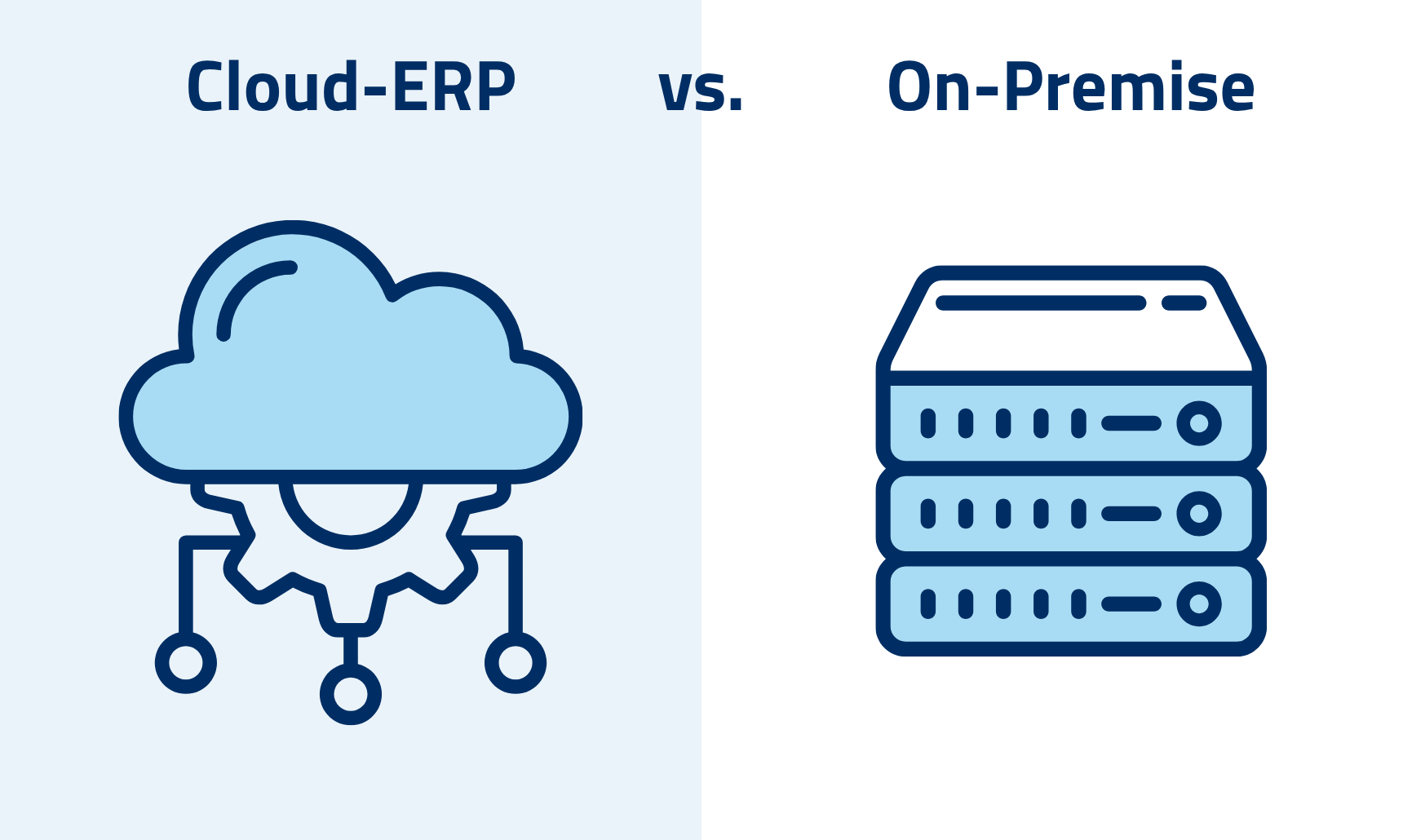
Hosting fees, license costs, IT support, the occasional upgrade project – these are the line items that show up in the budget. What many overlook: a classic on-premise or pseudo-cloud setup typically requires three to five vendors running in parallel. One for the software, one for hosting (e.g., AWS capacity), one for connectivity between systems, possibly one for hardware infrastructure, and a generalist partner trying to hold it all together.
Each of these vendors is a potential point of failure. And every coordination effort between them costs time and money.
The Invisible Costs
The more critical costs are the implicit ones. Parth Virkud, Managing Director at Alta Via Consulting and a veteran of NetSuite implementations, calls it the “Cost of Not Changing”:
“When a company stagnates on old technology, and its employees end up investing two, three, four days on topics that could be automated – that’s a hidden cost factor that simply disappears with a modern system.”
Parth Virkud, MD Alta Via Consulting
Two typical invisible cost drivers of an on-premise or incomplete cloud ERP solution:
- Manual redundancy: When accountants spend three to four days each month on manual reconciliations that an integrated system would handle automatically, it represents a direct misallocation of expensive resources.
- The “upgrade prison”: Every necessary update becomes a risky mini-project, because deep customizations in the software core block the ability to upgrade cleanly.
But the highest hidden costs are strategic in nature: companies planning international expansion, launching a new product line, or preparing for an IPO will sooner or later hit a ceiling. Their current system cannot support that growth – at least not without a costly side project that takes months to implement and delays the actual strategic initiative.
The honest calculation looks like this: what does the system cost today (direct and indirect), and what does it cost in missed opportunities if the business is still in the same place two years from now?
What Cloud ERP Changes – And What You Have to Give Up
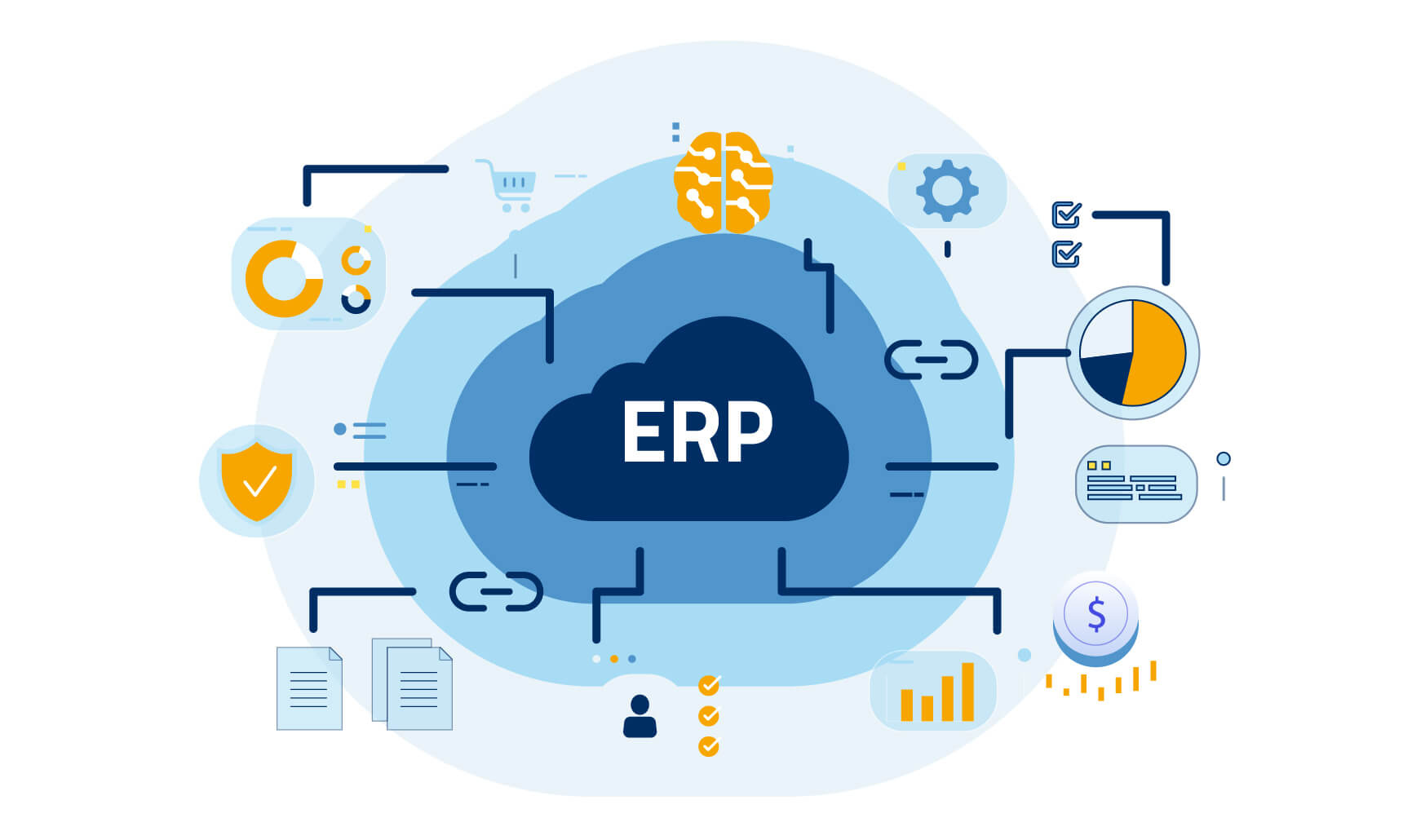
A genuine cloud system like NetSuite eliminates traditional IT hardware infrastructure and its associated maintenance costs. But this is not a pure IT project – it is a structural shift.
What Gets Better
Consolidation
The most tangible benefit for CFOs is consolidation: finance and accounting, sales, logistics, and management all work from the same data foundation. Parth Virkud describes what that looks like in practice:
“Someone in the warehouse sees in a single application what they need to pack today, what incoming deliveries are arriving, and what is on their inventory list. Management opens NetSuite and sees real-time updated P&Ls and balance sheets – based on what accounting and the warehouse did today. No phone call. No email. It’s just there.”
Parth Virkud, Managing Director Alta Via Consulting
In concrete terms, for multi-subsidiary structures: intercompany postings, multi-currency logic, and consolidation run natively within the system – no external side calculations needed. The month-end close that currently takes five days can shrink to two. Not because the team works harder, but because the manual data gathering is eliminated.
The “Clean Core” as a Liberation
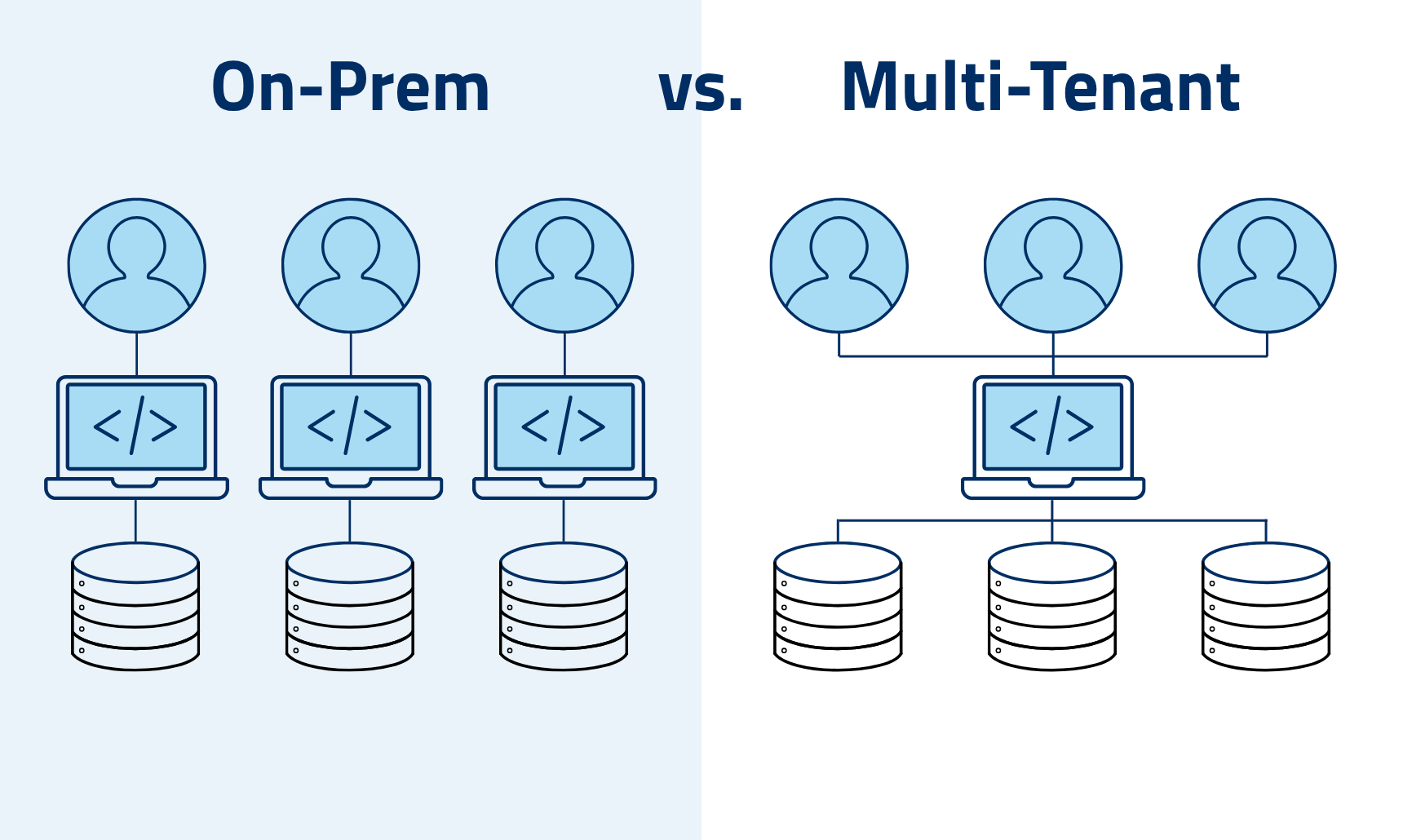
Here is an argument for cloud ERP that finance leaders can also use to convince their IT counterpart – the CTO: unlike traditional systems, a genuine cloud architecture separates the standardized core from individual customizations. Updates flow in regularly and automatically – with NetSuite, twice a year – without any operational downtime.
The Uncomfortable Truth: Standardization vs. Control
This is where honesty matters: moving to the cloud means giving up some degree of “total freedom” to tailor every exotic edge-case process down to the last line of code. Cloud ERP works best when the company first aligns itself with proven standards.
“You’re no longer locked into a version. The technology keeps evolving, and the system moves with it automatically. But anyone who tries to replicate every exception in the system will generate complexity in the cloud too – complexity that slows down the very benefits they were chasing.”
Parth Virkud, Managing Director at Alta Via Consulting
What the Switch Costs – And How Long It Takes
This is the question CFOs ask first – and the one consultants most often dodge. A common misconception is that ERP projects must take years and burn through millions. The reality in modern mid-sized companies looks quite different.
Costs: Two Line Items, No Hidden Extras
A NetSuite implementation has essentially two cost components: the license fees and the implementation/consulting fees. No separate IT infrastructure, no hosting, no connectivity projects.
Entry-level projects for smaller companies or clearly scoped process areas can start from around €10,000. While this does not cover a full-scope project, it represents a meaningful first step with measurable outcomes. In addition to the consulting and implementation costs, there are also the NetSuite license fees. For an MVP scope, these amount to approximately another € 10,000.
Mid-market projects involving multiple entities, complex processes, or international requirements will typically cost a multiple of that, depending on scope, module depth, and internal effort.
Total cost depends on the client’s own contribution
Important: total costs depend heavily on how well the company engages internally. An ERP project is a team effort. The implementation partner provides the methodological framework – but data, decisions, and sign-offs come from the client. Underestimate the internal effort, and timelines will stretch, and costs will rise accordingly.
Timeline: Months, Not Years
A lean project for a small company with clear processes (order-to-cash, record-to-report) can go live in six to eight weeks. More complex setups with multiple subsidiaries, advanced modules, and integration requirements typically take four to six months.
The approach Alta Via Consulting takes: no monolithic mega-projects, but iterative phases. First, resolve the critical pain points and establish a first system of record – then expand step by step. This reduces risk and delivers early results.
As a rule of thumb for growth scenarios: rolling out NetSuite to an additional subsidiary running the same processes typically takes just a few weeks, since the base configuration already exists.
The Most Common Cost Traps
- Underestimating internal effort: data cleansing, sign-offs, and change management consume more internal capacity than expected.
- Scope creep: every additional “it would be nice if…” during the implementation phase inflates time and budget disproportionately.
- Missing data migration strategy: harmonizing historical data from multiple legacy systems is often the most time-intensive part.
- Overly ambitious go-live scope: trying to do everything at once risks project delays. A more effective approach is to start with an MVP first and expand later.

How to Know Whether the Time Is Right
No consultancy will tell you “not yet.” So it is worth making the assessment yourself. From our experience, there are clear indicators that a company is genuinely cloud-ready – and clear signs it is not.
Clear Signals That You’re Ready
- Planned internationalization: you recognize that your current technology is actively blocking strategic goals – not just slowing them down, but preventing them. For example, opening offices outside the EU and needing real-time consolidation instead of waiting for reports from sub-systems.
- Transparency and reliable financials for investors needed: an IPO or investor entry is on the horizon, and auditors no longer accept Excel-based closes or are questioning the quality of your manually produced reports. This is a hard external driver.
- Vendor management burnout: managing three to five suppliers just to keep one system running means the downtime risk is simply too high – and is a clear signal the architecture no longer scales.
- The operational pain is nameable: not “our system is outdated,” but “our month-end close takes five days too long” or “we can’t produce reliable consolidated figures for the board.”
Signals That Say “Wait”
Conversely, it still makes sense to hold off on the ERP decision if:
- No concrete pain point has been identified: “everyone else is doing it” is not a sufficient basis for a decision.
- Processes are not yet stable enough: cloud ERP standardizes what is already clearly defined. Migrating chaotic processes means digitizing the chaos.
- Lack of management commitment: an ERP project is not an IT initiative. Without active involvement from the CFO and leadership, these projects fail due to change management challenges.
- Looking for a quick fix: anyone trying to solve a fundamental data problem with an ERP project is underestimating the effort involved.
Is Cloud ERP Right for Every Company?
Honest answer: no. Companies with extreme regulatory requirements for on-site data storage, highly individualized manufacturing processes that no standard module can cover, or very tight IT budgets with no medium-term growth perspective – for these, the switch may simply not make sense.
On data protection and GDPR compliance: NetSuite operates its data centers in Frankfurt and other EU countries on Oracle infrastructure and complies with all relevant EU regulations. In practice, this concern comes up frequently in discovery calls – but it is rarely a genuine obstacle.
Conclusion: The One Question That Really Matters
The question worth asking as a growing mid-sized company is this: what does it cost – operationally and strategically – if we are still running on the same infrastructure two years from now?
“My advice to CFOs is: don’t try to build the whole Ferris wheel at once. Start with a proof of concept for the processes where it hurts most in your company. If the system proves its value there, expand it step by step. That lowers the risk and delivers quick wins.”
Parth Virkud, Managing Director at Alta Via Consulting
That is the pragmatic framework that works in practice: not a monolithic mega-project delivering results in 18 months – but a clearly scoped first step that produces tangible proof within a few months. If that proof holds, you expand.
CFOs who approach ERP decisions this way tend to have a significantly higher success rate – not because they are less ambitious, but because they identify risks early and can steer projects more effectively.
The next question, then, becomes: “What exactly do I want to be different in the next twelve months – and can that be proven with a manageable first step?”