
SAP vs. NetSuite: Which ERP Is Right for Scaling Companies?
When companies consider ERP, the conversation often starts with IT. However, in growing organizations, it’s quickly clear: ERP is less about technology – and far more about how a company operates, manages performance, and scales.
That’s why the SAP vs. NetSuite debate comes up so often. It’s rarely just about feature comparison. Instead, it reflects two fundamentally different philosophies: SAP, rooted in deep, highly configurable enterprise functionality, and NetSuite, designed from the start as a cloud-native platform. This article explores those differences and focuses on what truly matters when choosing an ERP for growth.
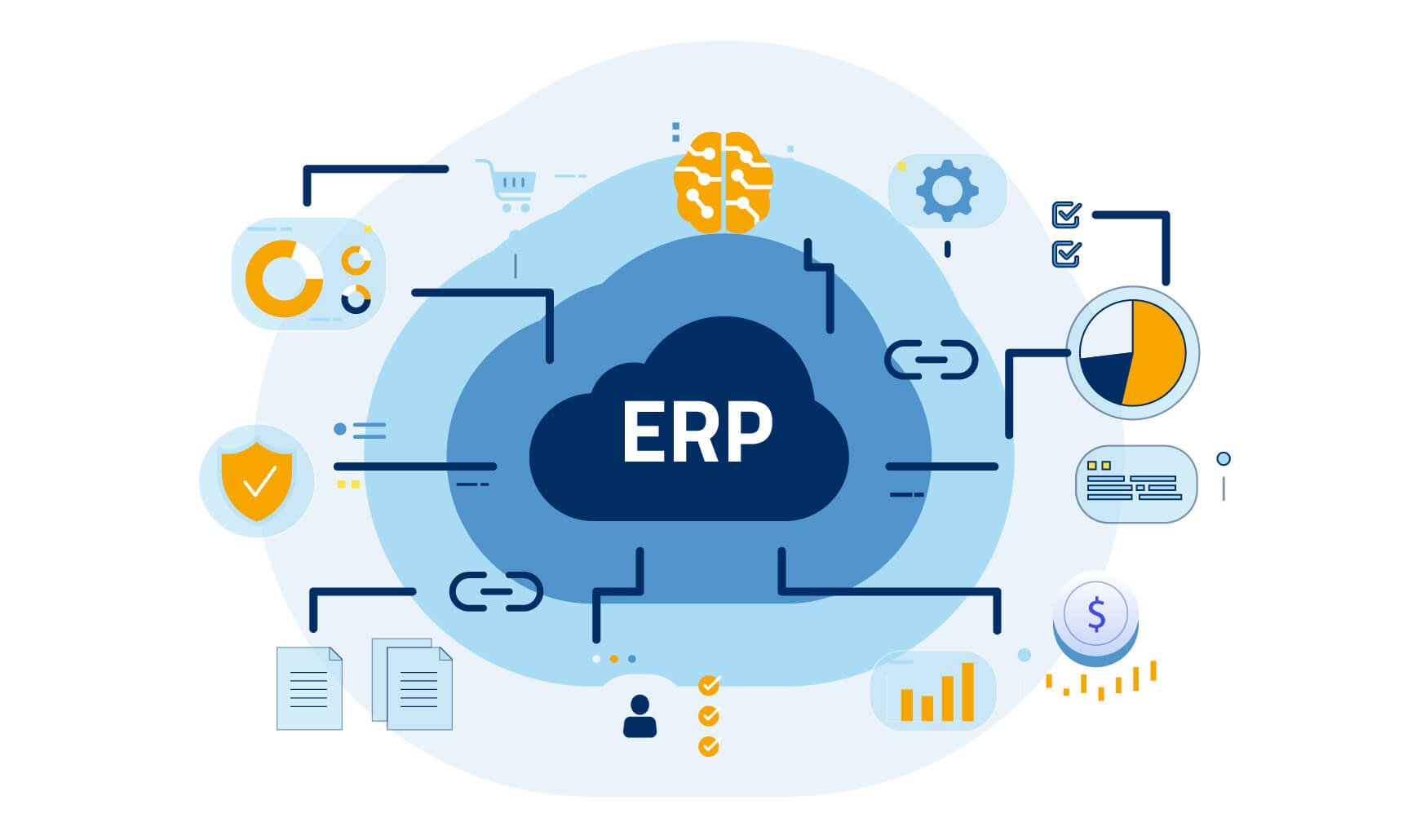
What an ERP System Really Does
An ERP system is the operational backbone of a business. It connects core functions on a shared data foundation, replacing isolated tools and fragmented spreadsheets with a single source of truth.
Typically, an ERP supports areas such as:
- Finance & Accounting: general ledger, financial close, cash flow visibility
- Procurement & Supply Chain: demand planning, supplier management, availability
- Inventory & Logistics: stock control, goods movements, fulfillment
- Production & Projects: planning, cost tracking, progress monitoring
- CRM & Reporting: customer data, forecasting, management insights
But the real value isn’t in the number of features. It’s in how seamlessly these functions operate together.
Inhalt

Why Scalability Matters More than Ever
In growth companies, requirements don’t evolve gradually – they accelerate. An ERP system must do more than reflect the current state of the business. It needs to support what comes next.
That typically includes:
- Multiple legal entities with independent accounting structures
- International expansion across currencies and tax regimes
- Rising compliance and reporting demands as governance becomes more complex
Multi-entity environments are often the real stress test. They quickly reveal whether an ERP is designed for scalable growth or whether it turns into a structural bottleneck as complexity increases.
What Truly Differentiates Modern ERP Systems
Today, ERP systems differ less in functionality and far more across three strategic dimensions: integration, scalability, and operating model.
For CFOs and COOs, an ERP creates value when it delivers clarity. That clarity starts with a unified data foundation. Only when finance, sales, and operations operate on the same system logic can numbers be explained consistently and decisions made with confidence.
The impact of real-time reporting and reliable forecasting becomes especially visible during rapid growth. When complexity increases, transparency becomes a competitive advantage.
Scalability is equally critical. New legal entities, international subsidiaries, or additional processes should be integrated without turning the ERP itself into a transformation program. As companies expand globally, standardized processes, local compliance requirements, and consolidated reporting move to the forefront.
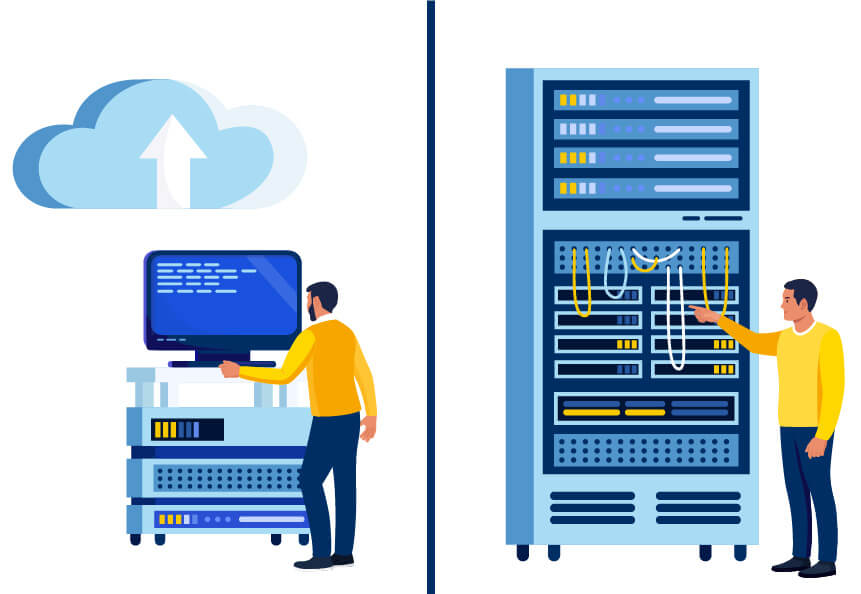
Cloud or On-Premises – A Strategic Decision
The choice between cloud and on-premises is not just technical – it’s structural.
Cloud models reduce the burden on internal IT, deliver continuous updates, and provide high availability by design. Traditional on-premises environments offer greater control, but often come with higher operational overhead and slower innovation cycles.
Ultimately, the question is not where the system runs. It’s how much adaptability the organization wants to build into its future.
Established ERP Players in the Market
The ERP landscape is broad. Yet in practice, a handful of systems consistently dominate discussions, largely because they have built strong user bases and partner ecosystems over many years.
Among them:
- SAP – with solutions such as S/4HANA (including cloud editions), Business One, and Business ByDesign, SAP maintains a strong position in both the enterprise and upper mid-market segments.
- Oracle NetSuite – a cloud-native ERP platform widely adopted by growth-oriented and internationally active companies.
- Microsoft Dynamics 365 – a flexible ERP suite particularly popular among organizations deeply embedded in the Microsoft ecosystem.
- Sage Group – long established in the mid-market, offering solutions ranging from Sage 100 to Sage X3, depending on company size and complexity.
- Infor – known for industry-specific ERP suites, especially in manufacturing and distribution.
- Odoo – an open-source ERP platform primarily targeting small and mid-sized businesses.
In Germany, locally focused providers also play a role, including Haufe solutions such as Lexware and Haufe X360, which are positioned specifically for SMEs in the German-speaking market.
Support, Operations, and Accountability in Growth Phases
For internationally scaling companies, the focus gradually shifts away from feature comparisons toward operational resilience. Open-source ecosystems such as Odoo often rely heavily on community-based support. While this can work well in stable environments, response times and accountability may vary, which can become critical when core processes are affected. Enterprise platforms like NetSuite, by contrast, operate with structured support models and clearly defined service-level agreements.
For business-critical functions, particularly in finance and manufacturing, accountability and transparency are not secondary considerations. They reduce operational risk during scaling and ensure that support is predictable, not dependent on informal community channels.
SAP ERP: Architecture and Cloud Strategy
When comparing SAP and NetSuite, it’s important not to conflate fundamentally different system philosophies. SAP built its market leadership in the on-premises era but is now clearly pursuing a cloud-first strategy. Since NetSuite was designed from the outset as a native cloud platform, this comparison focuses specifically on SAP’s cloud offerings.
Legacy SAP ECC environments, highly customized, on-premises installations, are intentionally excluded, as they follow a different architectural model and transformation logic.
SAP S/4HANA Public Cloud and the “Clean Core” Principle
With S/4HANA Public Cloud, SAP centers its strategy on a standardized core. The “Clean Core” principle separates customizations from the system core in order to preserve upgradeability and long-term maintainability.
The rationale is simple: minimize modifications at the core to maximize system stability over time.
A Practical Perspective
In reality, however, the discussion is more nuanced. Standardization can reduce certain types of complexity – but it may also shift complexity into integration layers and external extensions.
ERP analyst Eric Kimberling has argued that enforced standardization does not eliminate complexity; it often redistributes it.
For companies, this creates a strategic decision point: Align processes more closely with the SAP standard, or build extensions outside the core – for example, via the SAP Business Technology Platform (BTP). The latter approach can increase integration effort and introduce ongoing architectural complexity.
Before initiating a migration, companies should ask:
- Does the SAP standard truly fit our core processes?
- Do we have the internal resources to manage integrations and extensions long-term?
- Does SAP’s roadmap align with our growth strategy over the next three to five years?
SAP Business One
SAP Business One targets small and mid-sized organizations. However, its architecture and cloud logic differ significantly from S/4HANA Public Cloud, which makes it a separate consideration in strategic ERP evaluations.


NetSuite ERP: Architecture and Platform Logic
NetSuite was built from the ground up as a cloud-native ERP platform designed for integrated end-to-end processes. Finance, operations, and CRM operate within a shared system architecture rather than as loosely connected third-party applications.
At its core is a multi-tenant cloud model. Customizations and extensions are developed within the platform and remain upgrade-safe through regular releases. Core workflows do not require additional middleware, which keeps the system landscape lean and reduces operational complexity – particularly in scaling organizations.
We examined how this integrated platform logic plays out in the interaction between CRM and ERP in our article on NetSuite CRM vs. Salesforce.
Typical NetSuite Use Cases
NetSuite is often selected by mid-sized companies that:
- are expanding internationally
- manage multi-entity and multi-country structures
- want to scale processes without replacing their ERP system as they grow
Strengths and Structural Boundaries
Key strengths include:
- a unified data model across ERP, CRM, and finance
- lower IT overhead due to its cloud operating model
- upgrade-safe customization within the standard platform
Structural limitations tend to appear where highly individualized, historically evolved processes are expected to remain unchanged. NetSuite favors standardized platform logic over deep core-level customization.

SAP or NetSuite – Which Is the Better Fit?
Whether SAP or NetSuite is the “better” choice depends entirely on context. SAP is often selected by large enterprises with deeply customized, highly complex process landscapes. NetSuite, by contrast, tends to resonate with mid-sized companies expanding internationally and prioritizing integrated, standardized end-to-end processes.
A View from the Field
Parth Virkud, Partner at Alta Via Consulting and long-time NetSuite expert, supports companies in this decision from the early discovery phase onward. After hundreds of conversations, one pattern stands out:

“In early meetings, prospects usually focus on functional depth. But in discussions with growth-oriented companies, the real concern quickly shifts to agility. Many CFOs fear that an overly rigid system could become an anchor when expanding into new markets or adapting business models. NetSuite often stands out because its native cloud architecture enables growth without first having to build complex IT infrastructures or introduce additional middleware.”
Parth Virkud, Managing Director, Alta Via Consulting
Conclusion: It’s About Future Fit
In the end, the more relevant question is not which system wins in a feature comparison. It is this:
Which ERP model best fits our organization today – and where do we expect to be in the next three to five years?
Choosing between SAP and NetSuite is rarely a question of right or wrong. Both platforms are powerful, but they are built on fundamentally different architectural philosophies.
SAP has traditionally served long-established, highly customized organizations. In the mid-market, however, integrated, cloud-native platform models are becoming increasingly relevant as companies prioritize scalability and operational simplicity.
A Technology Check on Future Readiness
For our Lead Developer, Nitesh Devadiga, the decisive factor for the years ahead is technological openness, especially in AI:

“Future readiness depends on how open a system is to new technologies, particularly AI. NetSuite already enables bidirectional processes through its AI Connector. While many competitors remain limited to read-only access, NetSuite can leverage the Model Context Protocol (MCP) not only to analyze data but to actively write back into workflows. That’s true process enablement – not just smarter reporting.”
Nitesh Devadiga, Head of Development, Alta Via Consulting
Ultimately, the decision is not about SAP or NetSuite as brands. It’s about alignment.
Does the ERP model support the way your organization intends to grow – or will it require you to adapt your strategy to the system?