
Top 5 Insights to Optimize Your R2R Close: Moving from Friction to Flow
Is Your Finance Team Climbing Without a Map?
For many finance departments, the path from a transaction to a final report feels less like a paved road and more like a steep, treacherous mountain. While the industry buzzes about AI, many teams are still stuck at “base camp,” struggling with manual reconciliations and fragmented data that delay the month-end close by days. Adam Jamal, Director of Strategic Alliances at Zone & Co, points out that if your close takes more than five or six days, you are dealing with significant friction.
In a recent session of the Zone Spotlight Series, Parth Virkud (Managing Director, Alta Via Consulting) and Adam Jamal mapped out the route to turning fragmented processes into streamlined, automated engines.
Here is the strategic roadmap for mastering your Record-to-Report (R2R) ascent:
Table of Contents
1. Exposing the "Hidden Friction" in Your Finance Terrain
Efficiency is often lost in “crevasses” that don’t show up on standard dashboards. This hidden friction lives in the manual workarounds your team performs every day—what Parth Virkud calls “the stuff that does not really show up on dashboards.”
According to Parth Virkud, this friction typically lives across five core functionalities:
- Order-to-Cash (O2C): Gaps between sales orders, fulfillment, and billing lead to “DSO inflation” and manual revenue recognition.
- Procure-to-Pay (P2P): When purchase orders and invoices live in different systems, finance ends up chasing approvals and guessing accruals.
- Design-to-Build: Without cost-tie-ins in your ERP, you only discover margin losses at project close, when it’s too late to fix them.
- Plan-to-Execute: FP&A teams often build forecasts on week-old data exports because real-time sync is missing.
- The Close (R2R): This is the summit where everything upstream fits together. If upstream flows are broken, the close becomes a scramble of manual intercompany reconciliations and late journal entries.
“You can live with each [friction point] on its own… but string enough of them together and your team’s actually not making enough progress. They are busy surviving.”
Parth Virkud, MD, Alta Via Consulting

2. Treat Transformation as a Business Initiative, Not an IT Project
The number one mistake companies make is viewing an ERP transformation purely as an IT project with a fixed budget and “go-live” date. Parth Virkud argues that a successful R2R optimization is a business-led journey that requires stages and “acclimatization.”
Parth Virkud emphasizes a three-stage framework:
- Stabilize: Ensure your current configurations are correct and that underutilized modules are activated.
- Optimize: Connect silos and start automating manual tasks.
- Transform: Layer on advanced reporting and AI only after the foundation is solid.
“ERP transformation is a business initiative, not an IT-only initiative. You plan in stages, you acclimatize, and you don’t skip camps.”
Parth Virkud, MD, Alta Via Consulting

3. Stop Cutting New Trails: Leverage "Fixed Ropes"
Many companies spend six figures on custom developments for problems that certified SuiteApps already solve. In mountaineering, Parth Virkud explains, this is like carrying extra rope when fixed lines are already in place.
Customization without a plan creates “customization debt” – extra weight in your backpack that you will carry forever. Instead, leverage the NetSuite ecosystem of certified solutions that come with a roadmap and support.
“A well-designed solution that plugs into NetSuite will almost always outperform a custom-built solution over time… because that product has a road map and it’s been tested on different terrains.”
Parth Virkud, MD, Alta Via Consulting

4. Data Quality: The Ultimate Trail Condition
AI is powerful – offering anomaly detection, automated reconciliations, and natural language reporting – but it is only as good as the data it runs on. Adam Jamal warns that poor data quality leads to “confident wrong answers.”
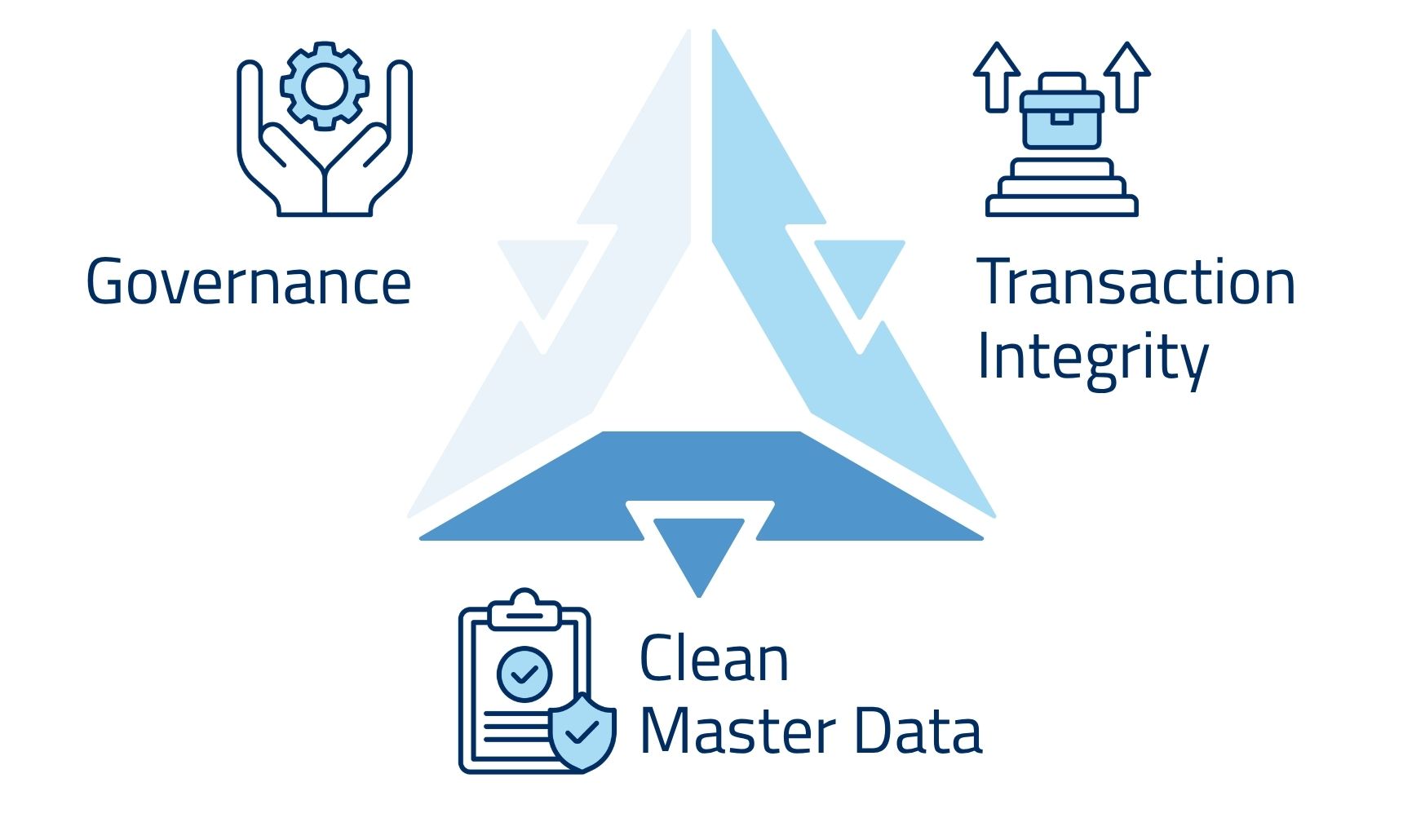
To prepare for AI, Parth Virkud suggests managing three areas:
- Governance: Clear ownership of data domains (Who creates records? Who manages naming conventions?).
- Clean Master Data: Eliminating duplicates in customers, vendors, and GL accounts.
- Transaction Integrity: Ensuring every transaction hits the right account with the right dimensions every time.
“AI on top of bad data is still bad data… it’s just faster. You’ll just be more confident in what’s incorrect.”
Adam Jamal, Zone & Co
5. Overcoming "Altitude Sickness": Change Management & Adoption
Resistance to change is common in ERP projects, acting like “altitude sickness.” To ensure adoption, Parth Virkud suggests involving end users from the beginning. When the team helps design the climb, they are much more likely to support the journey. Communicating the “Why” and celebrating milestones keeps the momentum visible.

6. The CFO’s Business Case: The Cost of Doing Nothing
When presenting a project to the board, Parth Virkud recommends focusing on three factors:
- Time Saving: Quantify the man-days currently spent on manual close activities.
- Risk Reduction: The cost of reporting errors, compliance gaps, or restatements.
- Strategic Capacity: If your controller isn’t spending two weeks on the close, what higher-value strategic work could they achieve?
“People often ask what it costs to get something like this done, but very rarely ask the question of what the costs are of doing nothing.”
Adam Jamal, Zone & Co

Conclusion: Reaching the First Ridge in 90 Days
You don’t need a monolithic, multi-year project to see results. By focusing on a Minimum Viable Product (MVP)-style approach, Parth Virkud notes that companies can achieve meaningful progress in their basic reporting and processes within 60 to 90 days.
The shift from friction to flow starts with a single clean data point. If you want a guide who has navigated these mountain routes before, Alta Via Consulting is here to help.